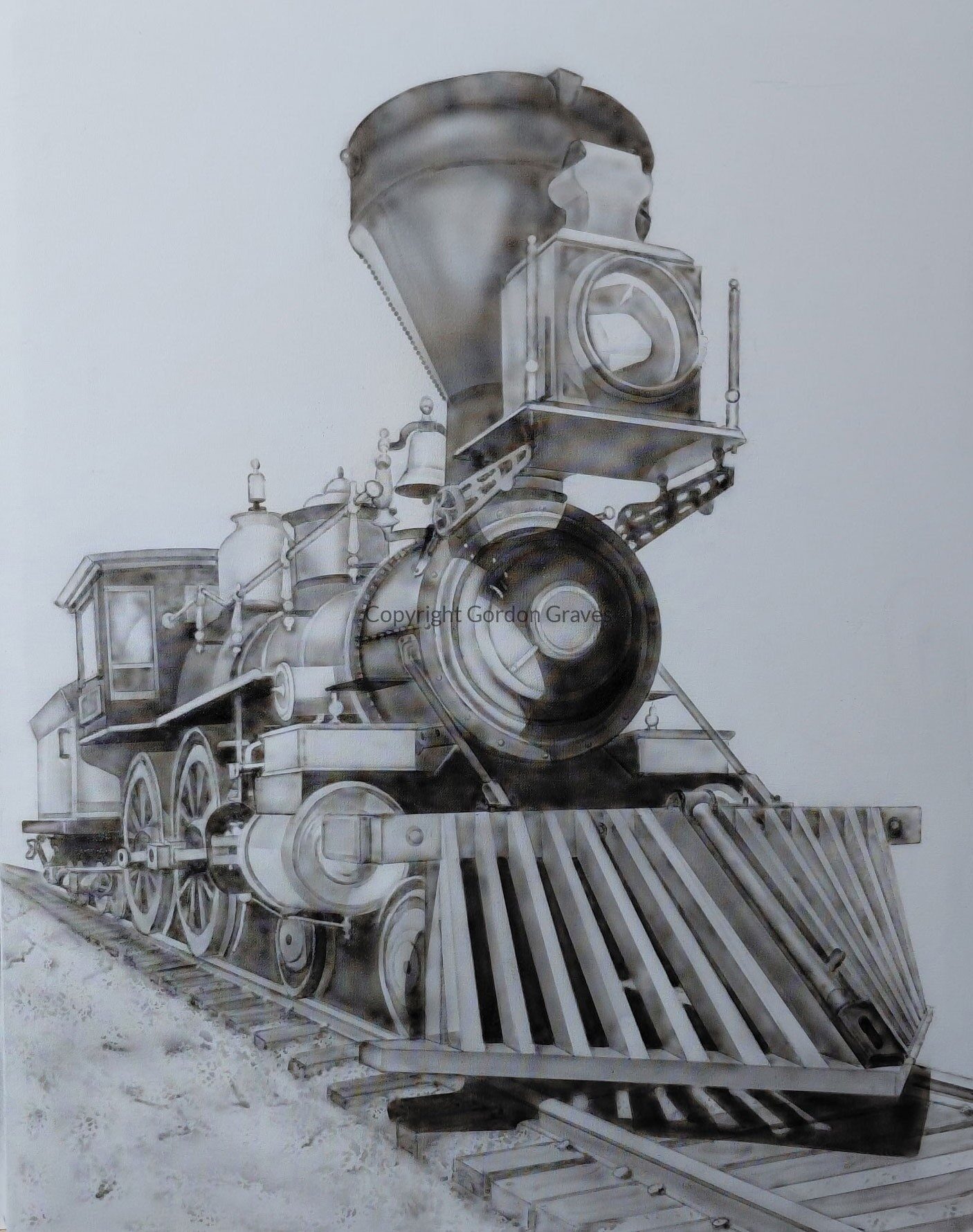
4-4-0 Wood Burning Mid 1800s – Early 1900s
Manufactured by Schenectady Locomotive Works*
24″ X 30″ Illustration on Canvas
$450.00
The 4-4-0 wood-burning steam locomotive was one of the defining engines of 19th-century American railroading. Known as the “American” type, its four leading wheels and four driving wheels provided the stability, speed and versatility needed to haul passenger trains across the rapidly expanding railroad network.
During this era, many 4-4-0 locomotives burned wood rather than coal, producing the sparks and cinders that made their tall, distinctive smokestacks an important part of the locomotive’s design.
Schenectady Locomotive Works, which would later become a founding part of the American Locomotive Company (ALCO), was an important American steam locomotive builder during this period. One of its most famous locomotives was the wood-burning Central Pacific No. 60, Jupiter, built in 1868 and present at the historic Golden Spike ceremony at Promontory Summit on May 10, 1869, marking the completion of the First Transcontinental Railroad.
This detailed technical locomotive illustration captures the distinctive engineering and craftsmanship of the 1860s American 4-4-0 wood burner — from its prominent smokestack and boiler to its classic driving-wheel arrangement — representing an unforgettable era of steam power, westward expansion and American railroad history.
That one gives us some great railroad-search language too: 4-4-0 wood burner, wood-burning steam locomotive, 1868 locomotive, American type locomotive, Schenectady Locomotive Works, ALCO, Jupiter locomotive, Golden Spike, Promontory Summit, and Transcontinental Railroad.
*Schenectady Locomotive Works, which would later become a founding part of the American Locomotive Company (ALCO).